

Contents
- Prelude: A Wall Hanging
- A Story about my parents’ meeting
- Who was Florence Mildred Rappa’s Mother?
- My Mother’s FamilyLine Back to the 6th Century (December 2022)
- My Fahter’s Family Line beginning 1550 (December 2022)
- My DNA map (February 29, 2024)
On this page I would like to reflect on my family. On my father’s side, my uncle Paul Jenny-Dobler traced the ancestry back to Gilg Jenny ca 1550-1626 from Langenbruck who married Margaretha Wyssner 1579. On my mother’s side, my cousin Adriaan Berenschot was able to trace ancestors back to Charlemagne, whose oldest verifiable ancestors were eight generations before him Ansbertus ca 520-590 and Blithildis, ca 513-603. Internet sources date their birth year anywhere between 510 and 580 and speculations about them are all over the place.

1. Prelude: A Wall Hanging

The Wall Hanging
17. IX. 2022
My mother embroidered our family history which was hanging in the stairwell of our house for as long as I can remember until she moved into the nursing home, where she died. On the top is, left, her cradle in the jungle of Java, on the right is my Father’s cradle by the creek and a huge Spruce tree. Below her cradle is Lake Geneva along which she met my father on the train followed by the hikes and bike tours they made through the Swiss alps (as described in the story below) before they married and moved into the house in the center of the picture. The distance from her cradle to the house is 11’165 km, from his cradle it is 150 m. The embroidery now hangs in my little house above the clavichord.
A few days ago I was eating my breakfast, using the clavichord as a table because the table was full of work in progress. I looked at the flag hanging from the window and for the first time in 67 years I noticed the orange band hanging from the top of the flagpole and this got me thinking about the symbolism. My mother was heavily into symbolisms, particularly in stories and fairy tales.
The house stands in Switzerland in the canton of Baselland. I, and all my siblings were born in this house. The flag is of the canton of Ticino. The orange (Oranje Boven) band is added to the top of dutch flags on king’s (or queen’s) day, meaning the house of Orange on top. It is also a song and chanted at soccer matches of the Dutch team. So what is the symbolism of all of this? My background and memories lead me to the following interpretation:

The house is where our family is rooted, in Liestal, Baselland, Switzerland. The flag is where our heart was, namely in the Ticino where we spent all our holidays since 1955. But it is topped by Oranje Boven. Dutch (a Creole blend of about 70% Dutch with Swiss accent and 3% Schwizerdütsch) was, and still is, our family language. Many of the year’s festivities were celebrated with a similar blend of Dutch and Swiss tradition. Therefore Orange is on top. Why is there no Swiss or Baselland flag when we are all Swiss citizens of Wenslingen, Baselland? My mother was rather critical of the Swiss bourgeois small town mentality she encountered in Liestal, and she did not hide those feelings. This of course rubbed off, particularly on me, resulting in emigration…. Our heart was clearly in the Ticino, also for my father. It was wilder, freer and more cheerful and colourful than protestant Baselland. How it would have been for us if we would have lived and worked in the Ticino, however, remains an open question.

At the bottom of the embroidery you can see, almost translucent, the Angel that welcomes us to paradise when our time is over in this world. This shows that the embroidery was not just a snapshot of a moment in the early fifties. It also shows that the story I remember being told that my parents had planned to have 10 children was not reflecting the original plan at the time of embroidering. You see five children on one side of the track with garden fruits and vegetables below with no room for more. These first five, including me, were born between 1943 and 1950. “De Kleintjes” were born in 1957 and 1958. They were embroidered later, in the early sixties, and one could argue that they somehow ended up “on the other side of the track”. This would indicate to me that “little ones” were not planned from the get go. All I know is that after the sixth we were told that five more were planned. However, the eighth did not make it and “the doctor said she can not have any more”.
The train with the original five of us takes us to the holidays in Ticino, but also to the seaside in Holland. The Torbola on the right is unfinished, only part of the roof is done and the wheel could be a spinning wheel or an unfinished bicycle. Also Ighellone on the left is only represented with an unfinished outline of a roof. All of the Ticino appears unfinished. The Torbola was my father’s first choice, but it did not seem available, so in early 1955 he bought nearby Ighellone. As soon as the deal was signed, the Torbola was offered to him, so he bought it as well, and for many years he then rented Ighellone to friends and relatives. This made for many great holidays with our fun loving Dutch cousins.
I am confident that my mother would have had no objections to my interpreting the symbolism of this embroidery, but I can well imagine that she might have had some arguments about the interpretation. While she was quite upfront about many of her feelings, she was also quite secretive about some aspects of her past, as the following story indicates.
The story of this wall hanging also demonstrates aspects of contemplation I touch on in my theological musings. Apparently “mindless” repetition of the same liturgy over years can occasionally bring new insights into the meaning of the texts. Looking at this wall hanging for decades and contemplating it brought me this new aha moment quite unexpectedly. Repetition is not necessarily dull. Going for holidays to the same place year after year, at least for me, was always exciting. I am now well rooted here in Canada, and a part of my heart still is in the Ticino, but definitely not in Liestal. Interpretation, therefore, can be rather personal.
2. A Story about my parents’ meeting
Now I will simply begin with my mother who presents us already enough of a mystery. She was born 1918 in Purwakarta, Indonesia and died 2010 in Dornach, Switzerland. The mystery part of the story was her first marriage, which she hid from us, even though my Dutch relatives knew about it. A few of my cousins came to my father’s funeral and afterwards we all sat together and reminisced about how my parents met. So my cousins tried to find out more details, but my mother would not budge and kept the story vague. I wonder how much easier her life could have been if she would have been upfront about such a rather common thing as divorce, particularly since she was in day-to-day affairs quite progressive. The burden must have weighed heavy on her.
I looked through my father’s musicians calendars. He kept meticulous records about all his students, his finances and some important events like meeting my mother. From these records, mainly expenses for mail, postcards and train tickets as well as groceries, I was able to construct a timeline that makes some sense. An entry of immigration records which my wife Joan stumbled across, put the last pieces of the puzzle together. I wrote this down to share with my cousins. So here is the story:
At my father’s funeral on February 10, 2006 my Dutch cousins tried to find out how Tante Florrie got into Switzerland during the war. Regardless how much they tried, there was no satisfying answer. As far as my mother was concerned, ‘nobody’ knew about her first marriage to Wouter van Baalen.
My mother tried to erase any evidence about Wouter. About a year before she died, I visited her at the old folks home in Dornach and we went through her photo albums. There was a photo of Wouter, and I asked her who this was. “Ach dat is so en vent die een beetje lol heeft” was her answer. The next day, the photo was removed from the album.
Somehow, my mother did not realize that her first marriage was recorded in the Berenschot Boek on p.225. Since it was no secret to the Berenschot clan, and since I don’t believe that keeping such secrets is healthy for most people involved, I would like to share the story.
My father painstakingly recorded everything in his musician’s calendar, mainly by recording any expenses, no matter how small. According to this source, Florrie met Peter on Aug. 16, 1939 on the train back to Holland. She was in a boarding school near Geneva and for some reason left head over heels shortly before the course was finished. In Lausanne Peter boarded the train after a hike in the mountains. He had a bouquet of alpine flowers with him. He settled in the compartment where Florrie sat. After a few glances, he tossed her a flower, and the rest is history; well not that simple but there I go.
I am not 100% sure about the accuracy of the details I describe and corrections are welcome. Anyway, after the funeral, she described this meeting in glowing terms and how she was on cloud nine after arriving in Basel, where Peter left the train. They exchanged addresses and parted.
The next entry of interest is on March 25, 1940. All it says is “Hildegards Ankunft”. This is the only entry of that name in his calendar for the next 4 years. Would this mean that maybe tante Hilda went to or through Switzerland at that time or was it another Hildegard? My father had a few flames back then.
Anyway, on March 3, Peter sent the first letter to Florrie (it cost Fr. 1.15).
On Aug. 8 he received a letter and a picture from Florrie.
Sept. 27, he receives another letter and he sends one back.
October 3, 1940 has the entry “Florries Hochzeit, 12:30”. (This was her first marriage to Wouter van Baalen, a school friend from Bandung, I believe.)
On November 25, 1940 he received a letter and photo from Florrie and then the correspondence went back and forth.
As of January 22, Peter receives letters from Holland to redirect to Java and vice versa because of the occupation. The personal letters continue, on average two per month and occasionally the Holland Java ones as well. One letter Peter had to send to Java via New York…
November 22 – 28 a fast back and forth between Java and Holland.
December 12, a postcard from Florrie.
On Jan 22, 1942 is an entry in the calendar spread over 3 days: FL!
This is where the story really begins.
Some 15 years ago, Joan was googling Florence Mildred Berenschot-Rappa to see what she could find out about my great grandmother and stumbled on a register of refugees crossing the border near Geneva. We can’t find a copy of the screen shot she took, but remember it was from 1942. Registered on the same day are Florence Mildred Jenny-van Baalen and Wouter van Baalen.
Florrie told us that she fled with some friends with a false passport. They crossed into Belgium through a house that was straddling the border. Then they took a train to France. They were very nervous about being found out. At the French border, a typical German officer yanked the door to their compartment open and barked “Passkontrolle!” and the whole group burst out laughing at this caricature of a German. He got so furious that he slammed the door shut without checking their passports. Near the French Swiss border in the Jura they had to cross at night on foot through the snow into Switzerland. I assume Wouter had probably his own passport and Florrie the fake one under F.M. Jenny-van Baalen. She was handed off to her Swiss contact, which was Peter.
Now come some interesting entries.
On February 13, 1942 Peter bought a dagger for Fr. 2.50. I recall Konstantin telling the story that Peter was going to challenge Wouter to a duel…! On February 23 he wrote a letter to Wout (probably the challenge to a duel).
Florrie must have stayed in Liestal until March 5, when Peter bought her a return ticket to Geneva for Fr. 30.80. She must have returned the next day, when he gave her Fr.100.-. On March 9, he bought her a ticket to Geneva for Fr 18.75.
On March 27, Peter bought a ticket to Geneva for Fr. 24.40 and on March 30 he cancelled his piano students and entered “Stürmische Abfahrt” nach Creux, where they met, and then spent almost two weeks in Geneva, even buying curtains for the pension or hotel (I assume) where they stayed…
There is a confusing back and forth of letters and meetings. I think as of May, Florrie stayed with the Landmanns in Basel, but must have spent much time in Liestal. Peter was still living at home, and I assume he must have paid for the meals Florrie ate there. Every meal she had there is noted, but interestingly without a price. They must have agreed to a flat rate.
The first two weeks in August they did a bicycle tour through the Engadin.
On September 6 are two entries, one for a singing lesson for Florrie Fr. 6.- and Fr. 28.75 for Verlobungskarten. That must have been when the divorce went through.
On February 10, 1943 they got married. I understand that Peter managed to persuade the Zivilstandsamt to not enter Florrie as divorced in the family register.
In Florrie and Peter, two worlds met. One wide and social, the other small and introverted. Florrie, born in Indonesia, moving back and forth between Holland and Java; Peter born In Liestal, moving 150 meters from his birth home to the Sonnenweg, just up the creek and around the corner. Florrie was used to high society, parties and banquets, Peter to small town protestantism with strict social restrictions. They both broke away from their former lives, creating their own little microcosm, living a hippie life, before this term was created. They broke away to search for their own spiritual path, which eventually they found in the teachings of Bo Yin Ra. In dying, however, they went back to their roots again.
When Peter died, he died in his tradition, asking for his favorite meal of Bratwurst and Rösti. Then he asked for forgiveness, saying his prayers, taking out his dentures and giving them to Florrie saying that he does not need them anymore. Sandra went to the piano to play his favorite tune, the Prelude in B-flat minor of the Wohltemperierte Klavier 1. When she finished, she asked him if he had heard the mistakes, and he winked at her. Then he slipped away, all in a matter of a few hours.
When Florrie died, it was another ‘world trip’ and a party. Some days before she had her aneurysm, she told one of my sisters that she had a dream of going for a beautiful hike. Coming back from the hospital to her room to die she had a full week’s party, with all the family visiting and singing. When Joan and I arrived from Canada, her room was like a Gipsy camp. I spent the nights with her, and it appeared that on the second night she had died, but then her heart started beating again (I guess this was because of the pacemaker) and she asked me to tell everyone to come again, so we had another party singing the Gloria from the Christmas carol over and over again, along with many other songs. Then at night she ‘died’ again. When she came by, I told her that she has to go the rest of her journey on her own. She agreed, muttering “self gaan”. As she was drifting in and out of consciousness, she woke up once laughing, and her last coherent comment was that she remembered how her science teacher in Bandoeng (?) played a really scary trick on the class. Soon after, she slipped quietly away.
It is interesting that Peter’s funeral was on February 10, 2006, their 63rd wedding anniversary. It is also interesting that Florrie died December 18, just after midnight, one day after Wouter’s 92nd birthday.
About my grandmother Berenschot I will reflect in a later post. Her story is not as much of a mystery as far as I know, but my great grandmother presented me with some interesting sleuth work. There are some unanswered questions, and my conclusion is only speculative. It got triggered when I contacted Susan through 23andMe who was a genetic match. She is a very distant cousin whose great grandmother was a half sister to my great grandmother. Here are my findings:
3. Who was Florence Mildred Rappa’s Mother?
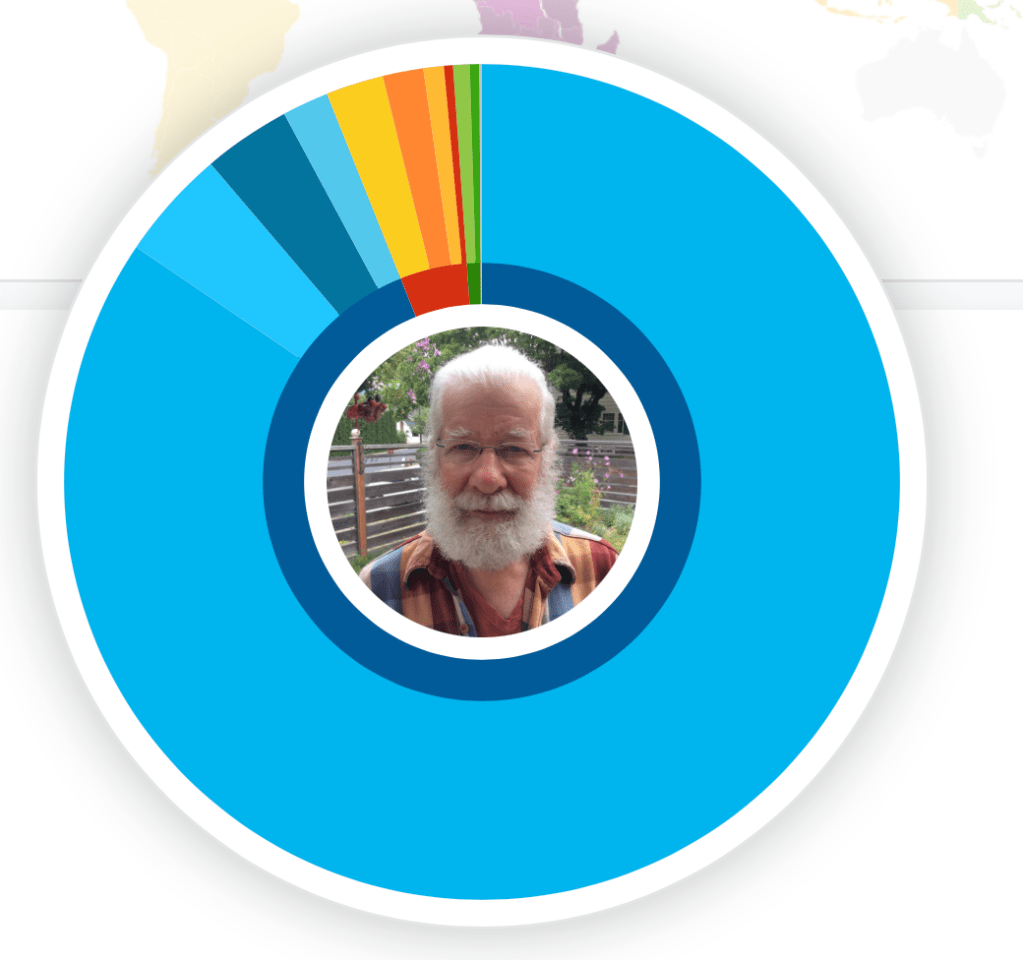
My mother, Florence Mildred Jenny, nee Berenschot, divorced Van Baalen once told me the story that her grandfather Gerrit Hendrik Berenschot (1857-1949) picked up F.M.Rappa from an Island(?) where unmarriable women were “kept”. Considering the racism in those days and the societal conventions, this must have been quite unusual. It seems clear from pictures of FMR and is confirmed by my DNA test, that FMR was 50% Malaysian or Indonesian.
According to geneanet.org/rikkohler (obtained through Susan Keogh) Johan George Rappa (1808-1873) was married to Johanna Antonetta Stecher (1813-1895)
His son George Rappa (jr) was married (according to rikkohler) to Charlotte Adriana Meyer (1837-1887), but Adriaan’s Kwartierstaat records it as “uit en relaatie met CAM”. They had 10 children. The first was Charlotte Florence Rappa (1858-1858), the second was Florence Mildred Rappa (1859-1937), my great-grandmother. The last sibling was Henry Rappa (1870-1870). According to Charlotte Adriana’s list on the rikkohler site, her cause of death is listed as: “Oorsaak: verdronken samen met haar dochter Charlotte Florence”. Well, this is confusing, if Charlotte Florence died as an infant. Something got mixed up here. The tradition in our genealogy appears to be that children’s names of siblings who died young were used fully or in part for later siblings.
I do however faintly remember my mother telling a story about a mother and her daughter drowning together, but that must have been someone else and got mixed up in the rikkohler genealogy.
But this is just another mystery for some sleuth to solve.
Therefore, it is likely that Charlotte Florence died as an infant and the name Florence was passed on to FMR.
From this, it would not be immediately clear why FMR should have been ‘unmarriable’; (except maybe for being mixed race) however, spending the weekends dancing with dutch officers could perhaps ‘stigmatize’ her.
Susan Keogh, whom I connected with through 23and me, is a descendant of the Rappa/Stecher union. In her family history it is believed that J.G. Rappa divorced Johanna Stecher and Florence Mildred Rappa was not included in the list of siblings of her great-great-grandmother Adelaide Rappa, but is listed as halve-sister in the rikkohler genealogy. Their family story possibly mixed up Rappa sr with Rappa jr. I also do not see any indication of a Rappa/Stecher divorce. According to Susan, three Rappa sisters used to spend weekends in Singapore (the island?) meeting with Dutch officers to dance… this is what she wrote:
My great great grandmother was Adelaide Rappa, daughter of George Rappa of Malacca. She married Capt. Hector Kruijsboom in Tanjung Pinang; their son George LH Kruijsboom was Asst Resident of Bandung and Resident of Surabaya. Their daughter Lucy, my grandmother, was born in Cheribon.
So, after this almost Shakespearean confusion I would like to present a possible scenario:
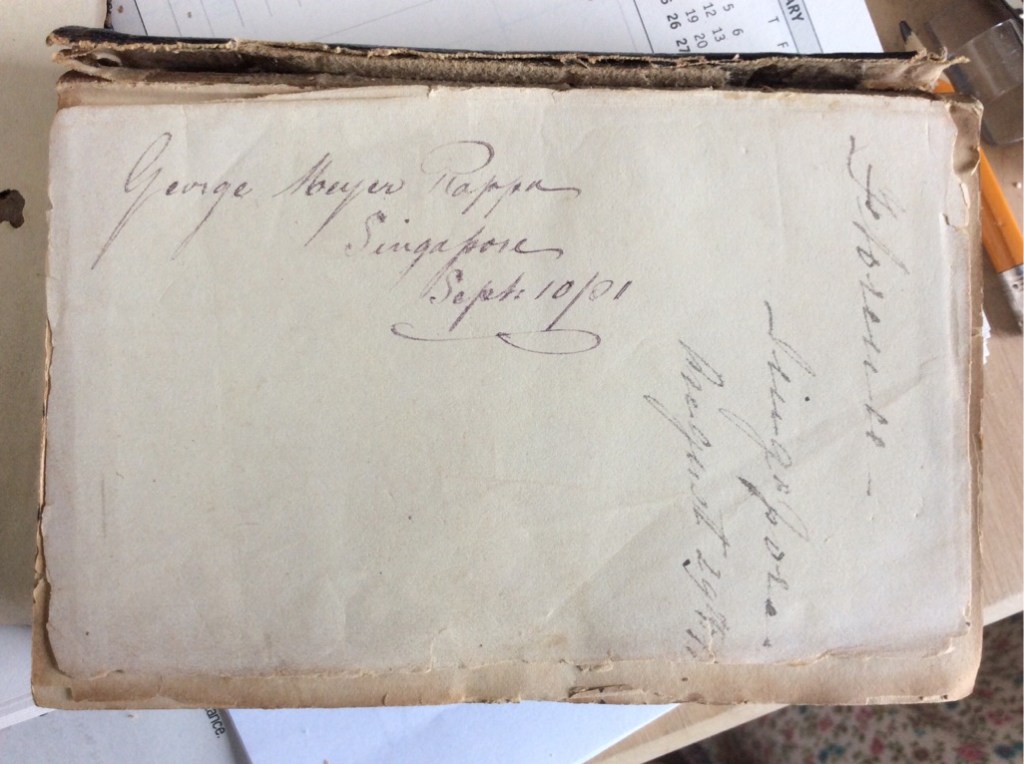
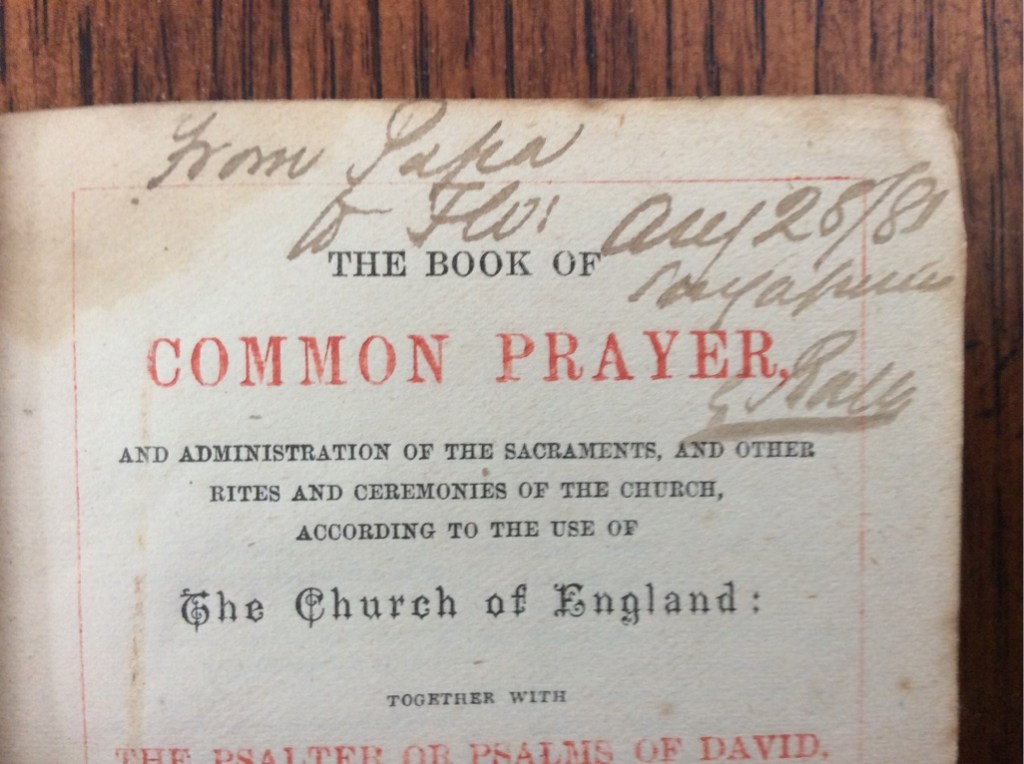
George Rappa jr might have had an affair with most likely a servant of the estate who was indigenous. He clearly accepted FMR as his daughter (while apparently not acknowledging her mother), which is evident, not only from the genealogies, but also from the inscriptions in the Bible and Book of Common Prayer which he gave FMR on the day before her wedding to Gerrit Hendrik Berenschot. These books are on our bookshelf here in Nelson.
Is anybody out there, who might remember anything that could add (or remove) another piece to this puzzle?
I am writing in English, because I never learnt to write in Dutch; but I can easily read responses in Dutch and German.
Hartelijke groetjes uit Nelson BC
Tobias

4 My Mother’s Family Line Beginning in the 6th Century
click on the link below to access (December 2022)
https://docs.google.com/document/d/1RWasYoXNb61imBGrkq8Wn0Ecq5HagrgHoxRoS07x8NM/edit?usp=sharing
5 My Father’s Family Line, Beginning 1550
click on the link below to access (December 2022)
https://docs.google.com/document/d/1I5wN9_usB4JSxKTKHKDsioneZUChzdHbX9LJZgpC0OU/edit?usp=sharing
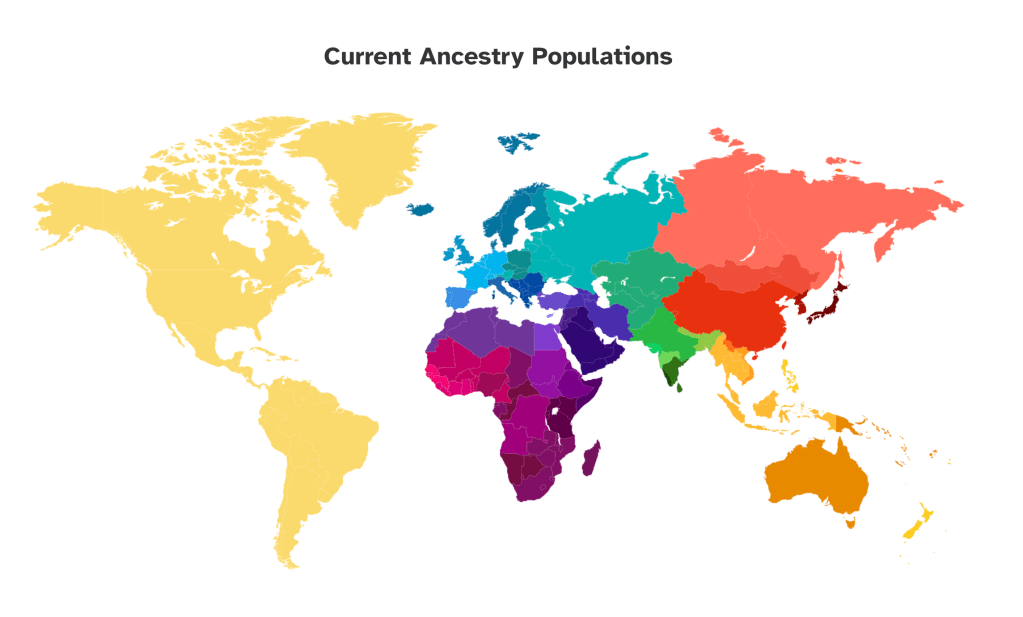
6 My DNA Map (2024-02-29)

 Reflections